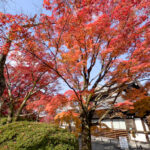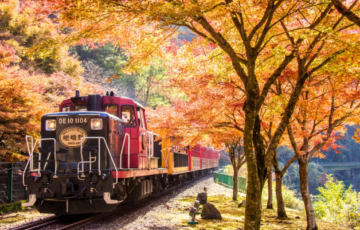
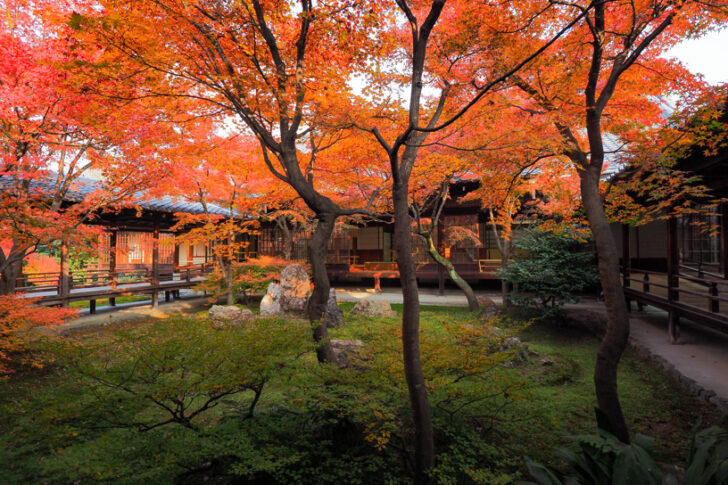
Today I will introduce you to the autumn foliage in the Higashiyama area of Kyoto.
Autumn leaves are very beautiful, so please go and see them.
1,Toji Temple
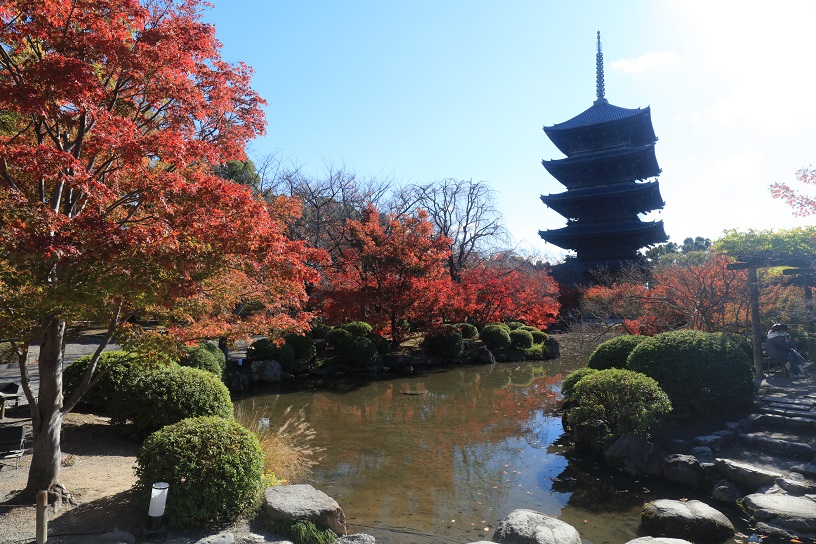
Late November to early December is the best time to visit.
It is a 15-minute walk from the Hachijo Exit of Kyoto Station.
To-ji Temple, a World Heritage Site, is known for its five-story pagoda, a landmark tower representing Kyoto.
At approximately 55 meters tall, it is the tallest existing wooden structure in Japan. The construction of the pagoda was promoted by the efforts of Kobo Daishi Kukai.
2,Shourenin
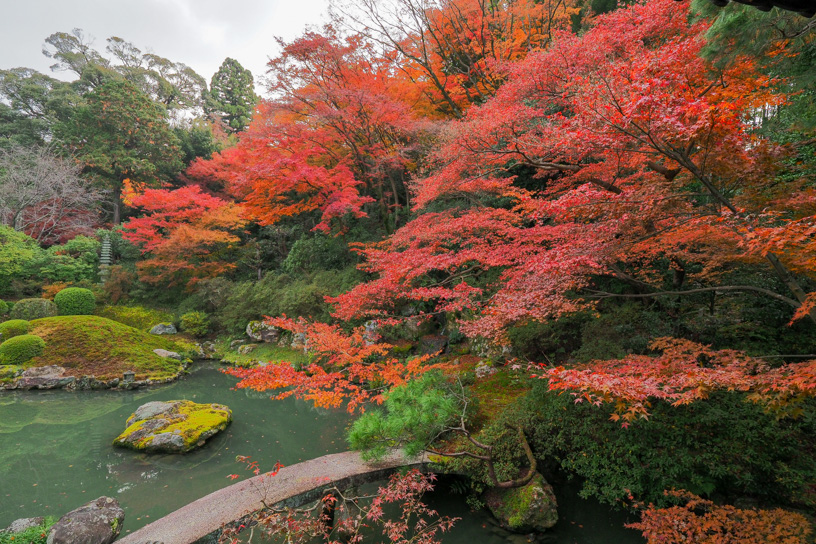
Late November is the best time to visit.
5 minutes walk from Higashiyama Station (Subway Tozai Line)
In the fall, the garden is gorgeously decorated with autumn leaves, and the view of the garden in the fall from Kajo-den is truly magnificent.
The Kirishima Garden by Enshu Kobori is also a highlight of Seiren-in in the spring, with the bright red Kirishima azaleas blooming around the consecutive holidays in May.
In spring and fall, the garden is open for nighttime viewing.
The entire garden is lit up and the area in front of Shinkinden (Imperial Palace) is illuminated with blue lights, creating a fantastic atmosphere.
3,Kodaiji Temple
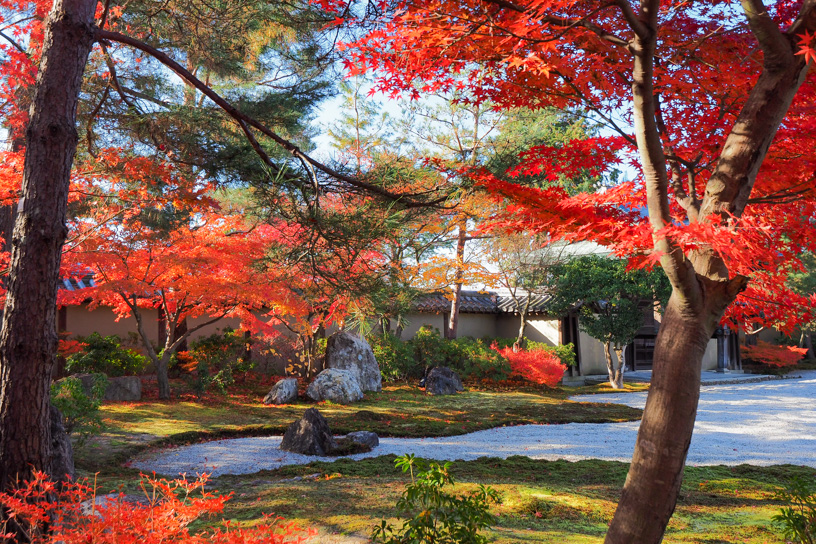
The best time to visit is from mid-November to early December.
From JR Kyoto Station or Kintetsu Kyoto Station, take city bus 206 (Higashiyama-mawari), get off at Higashiyama-Yasui stop, and walk east for 7 minutes.
Kodaiji Temple was founded in 1606 by Hideyoshi Toyotomi’s wife “Kita Masasho (Nene)” to mourn Hideyoshi.
The temple has many important cultural properties, such as the “Kangetsudai” (moon viewing platform), which was moved from Fushimi Castle, and the “Otamaya” (mausoleum), which is decorated with Kodaiji maki-e lacquerware.
The temple grounds are also rich in nature and are famous as one of the best places in Kyoto to view the autumn leaves and cherry blossoms.
4,Kenninji temple
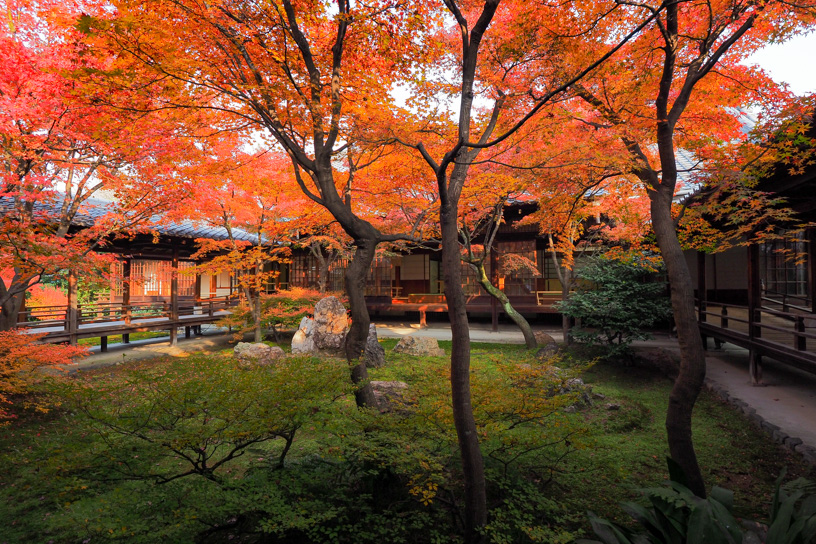
Late November to early December is the best time to visit.
7 min. walk from Gion-Shijo Sta. on Keihan Railway
10 minutes walk from “Kawaramachi” station of Hankyu line
Kenninji Temple possesses many cultural assets. In the Shoin, the Wind and Thunder Gods (high-resolution facsimile) by Tawaraya Sotatsu, a representative painter of the Rimpa school, is on display.
In the hojo (main hall), visitors can see high-resolution facsimiles of paintings by Kaihoku Tomomatsu, such as Unryu (Dragon with Clouds and Dragons).
The Hojo’s dry landscape garden, Daioen Garden, and the courtyard garden, Chion-tei Garden, are also highlights.
In particular, the Chion-tei Garden has a variety of expressions depending on the season, and is especially beautiful during the fall foliage season.
5、Kiyomizu Temple
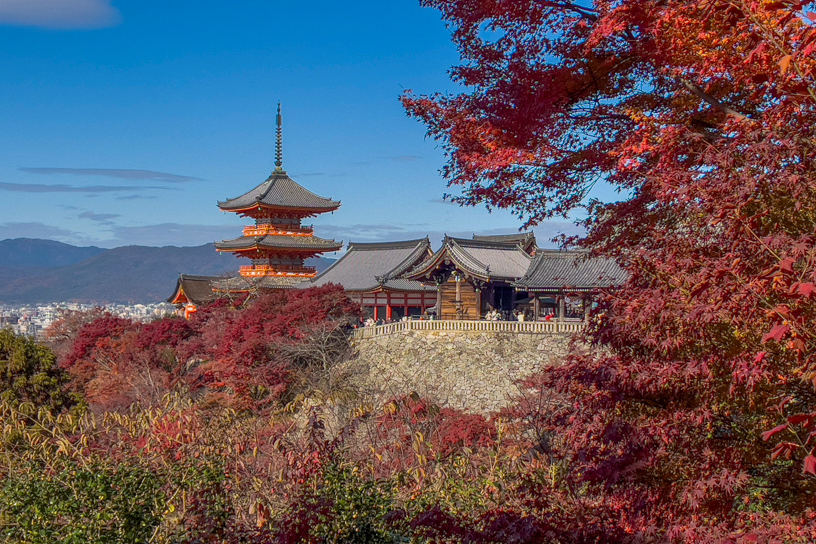
Best time to visit is late November to early December.
Take Kyoto City Transportation Bureau (city bus) No. 206 to Higashiyama-dori Kitaoji Bus Terminal or No. 100 to Kiyomizu-dera Gion Ginkaku-dera, get off at Gojozaka and walk 10 minutes.
Kiyomizu-Dera Temple is a historic temple with a 1,200-year history and is recognized as a World Heritage site.
The temple grounds are lined with national treasures and important cultural assets, including the main hall, from which the phrase “jumping off the stage at Kiyomizu” was derived, and the three-storied pagoda.
Other power spots include Otowa Falls, which is said to bring good luck in the pursuit of love, and Zuigudo, famous for the tour of the temple’s interior.
6,Shogunzuka Seiryuden
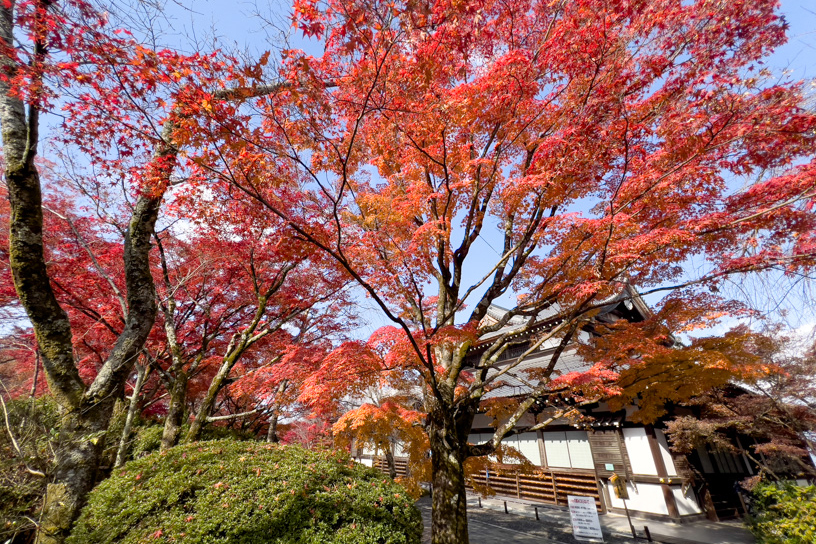
Mid to late November is the best time to visit.
Approximately 20 minutes by cab from Kyoto Station. Approximately 10 minutes by cab from Seirenin Temple.
The enclave precincts of Seiren-in Temple. Located about 200 meters higher than the city center, the large stage offers a panoramic view of the city of Kyoto.
The garden in front of Seiryuden is planted with autumn leaves, cherry blossoms, rhododendrons, and satsuki (Japanese azalea), offering seasonal beauty. The garden is illuminated in spring and fall.