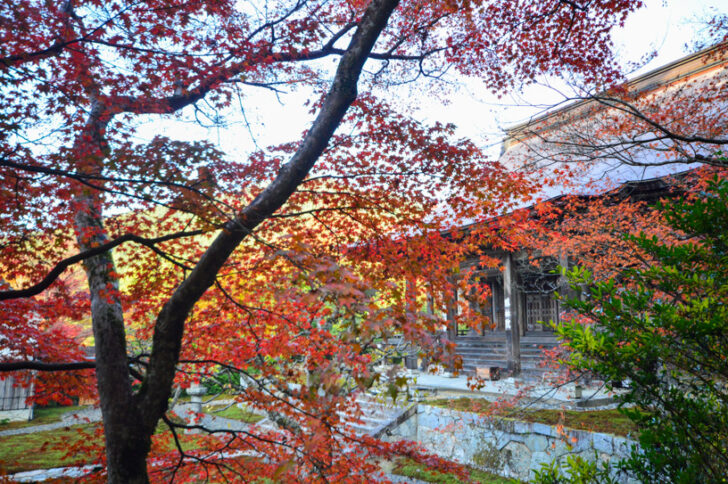
1,Sanzenin
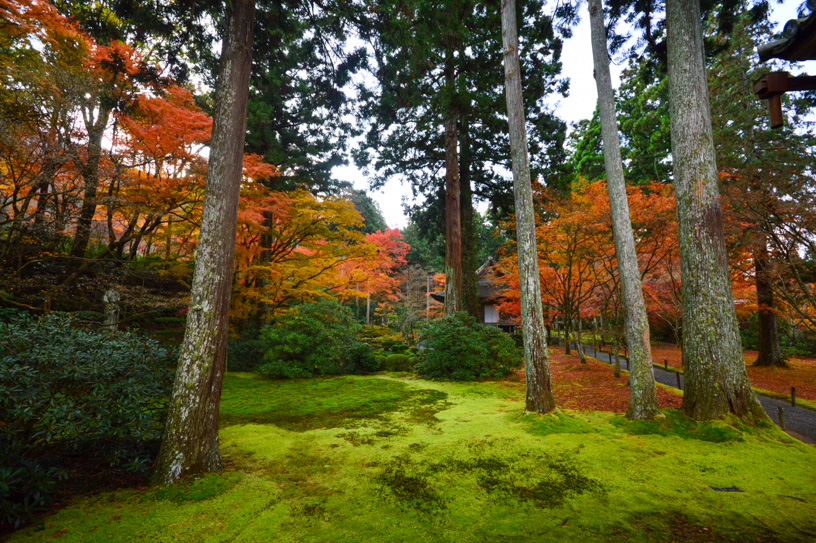
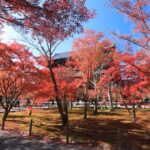
Mid to late November is the best time to visit.
From Kokusai-Kaikan Station on the Subway Karasuma Line, take the Kyoto Bus to Ohara – 10 minute walk, or from JR Kyoto Station, take the Kyoto Bus to Ohara – 10 minute walk.
The three statues of Amida Nyorai, Seishi Bosatsu, and Kannon Bosatsu are representative of the Heian period and are designated as National Treasures.
The sliding door paintings in each room of the Kyakuden, which were repaired in the early Taisho period (1912-1926), are painted by Takeuchi Seiho and five other artists who represented the Kyoto art world at the time.
2,Shourinin Temple
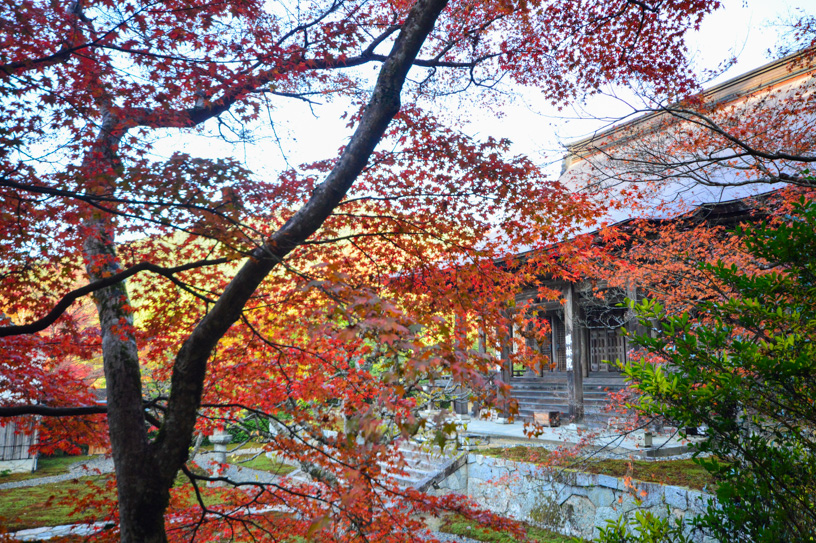
Mid to late November is the best time to visit.
From Kyoto Station, take Kyoto Bus No. 17 or 18, get off at Ohara Bus Stop, and walk 10 minutes.
Shorinin Temple is less than a 10-minute walk from Ohara Sanzenin Temple.
It was 300 yen per person. It was a Tendai-shu temple with quiet precincts and an impressive, stately roof of the main hall.
The temple is said to be associated with Honen Shonin, a member of the Jodo sect of Buddhism.
3,Hosenin
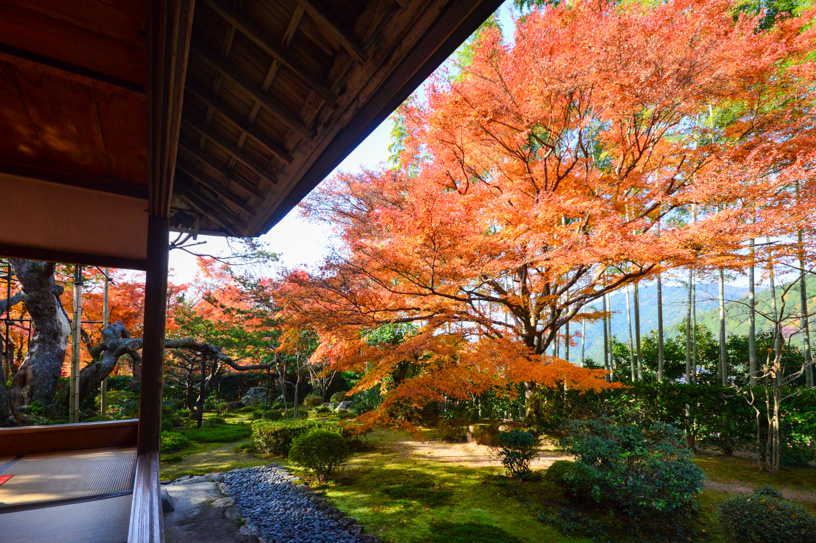
Mid to late November is the best time to visit.
From the Kyoto Ekimae bus stop, take the No. 17 or No. 18 bus to the Ohara bus stop, which takes approximately 65 minutes.
The Shoin was reconstructed in the mid-Edo period, and the ceiling of the corridor is famous for its “blood ceiling,” a relic of Fushimi Castle.
The Shoin is covered with a scarlet carpet, and the view of the bamboo garden from the carpet is truly refreshing.
4,Jikko-in
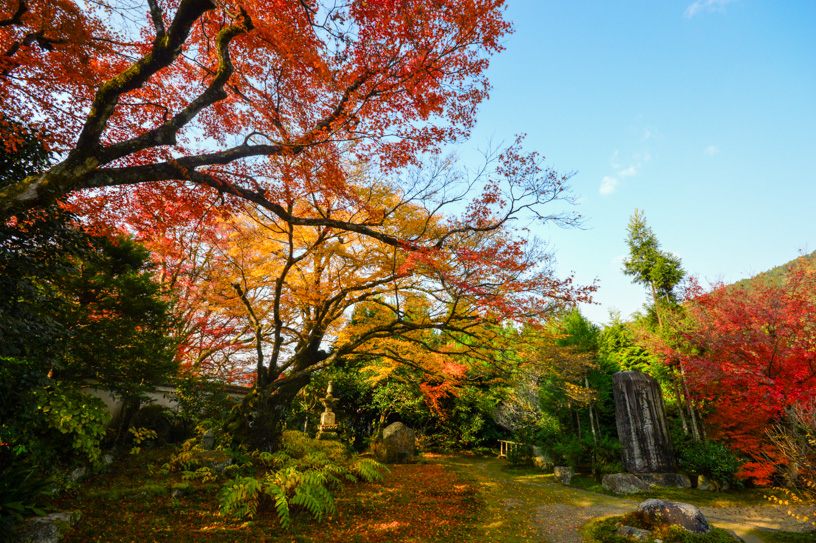
Best time to visit is mid to late November.
Get off at Kyoto Station Central Gate Exit, take Kyoto Bus No.17 bound for Ohara from C3 bus stop, about 1 hour, and walk about 10 minutes from Ohara Bus Stop.
Kyoto is home to countless temples and shrines.
Of these, Ohara in Rakuhoku is one of the most famous places in Kyoto, with Sanzen-in Temple and Jakkoin Temple, both sung in the lyrics of “Onna Hitori” by Duke Aces, attracting many visitors on a daily basis.
During the autumn foliage season, when the trees are beautifully colored, Sanzen-in Temple is crowded, including the approach to the temple, but if you go a little further back in front of Sanzen-in Temple, the flow of people becomes quieter, and the temple is dotted with temples with unique characteristics. One of these temples, Jikkoin, has a serene garden where you can see the Fudan-zakura (non-flowering cherry blossoms) that bloom from fall to spring.
5,Jakkoin temple
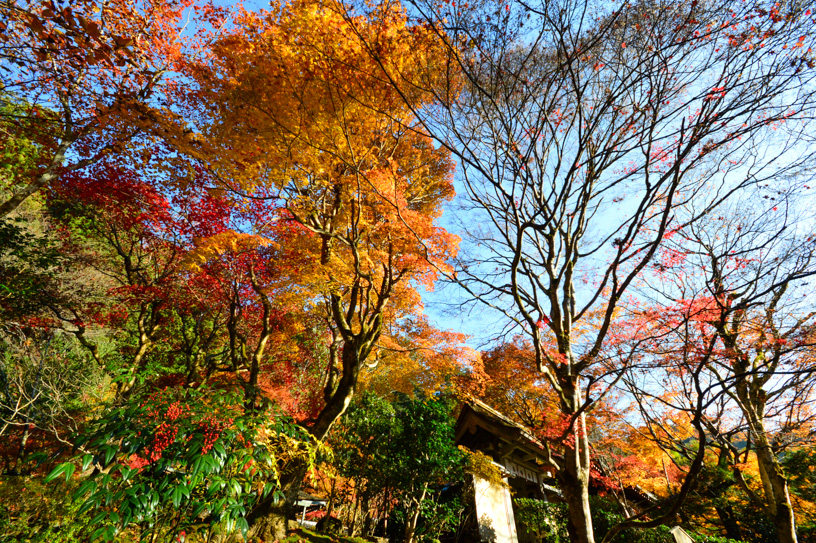
Best time to visit is early to late November.
15 minutes walk from Ohara bus stop by Kyoto Bus.
Take Kyoto Bus No. 17 (No. 18) from Kyoto Station (from platform C3).
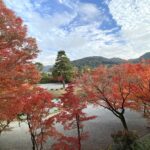
The garden, which was described in the Tale of the Heike, offers beautiful scenery in each of the four seasons, especially during the colorful autumn foliage season, which attracts many tourists.
The garden, where trees, plants, and flowers quietly bloom, is also a place where visitors can feel the history of the area. When you visit, please take your time and enjoy the quiet time while admiring the beautiful garden and buildings.
6,Kibune Shrine
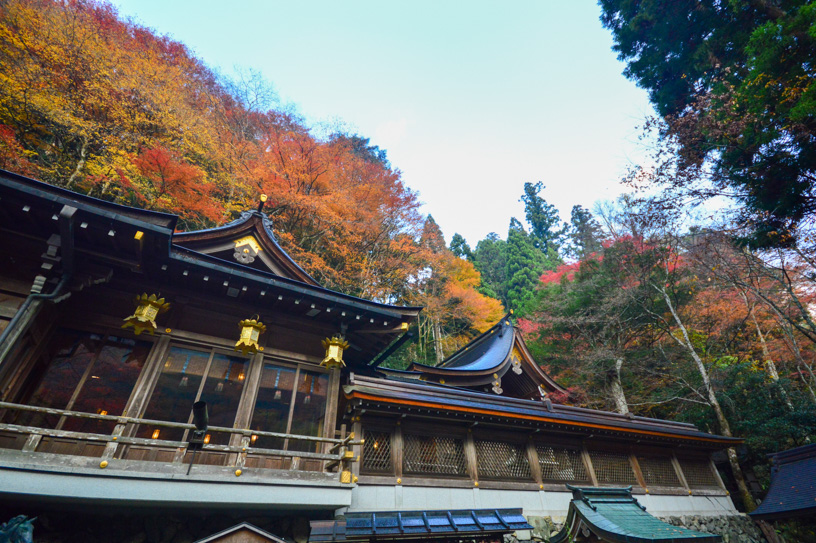
Best time to visit is early to late November.
The trip from Demachiyanagi Station to Kibunekuchi Station takes about 28 minutes.
Once you arrive at Kibunekuchi Station, take another bus. Take Kyoto Bus No. 33 bound for Kibune, located just outside Kibunaguchi Station, and you will arrive at Kibune, the closest bus stop to Kibune Shrine, in about 4 minutes.
After getting off the bus, it takes about 5 minutes to reach the red torii gate of Kibune Shrine.
Kibune Shrine enshrines the god of water, the source of life for all things, and is the main shrine of the water gods, numbering 2,000 shrines nationwide.
It is one of the oldest shrines in Japan, as there is a record of its construction in the 6th year of the Hakuho Era, approximately 1300 years ago.