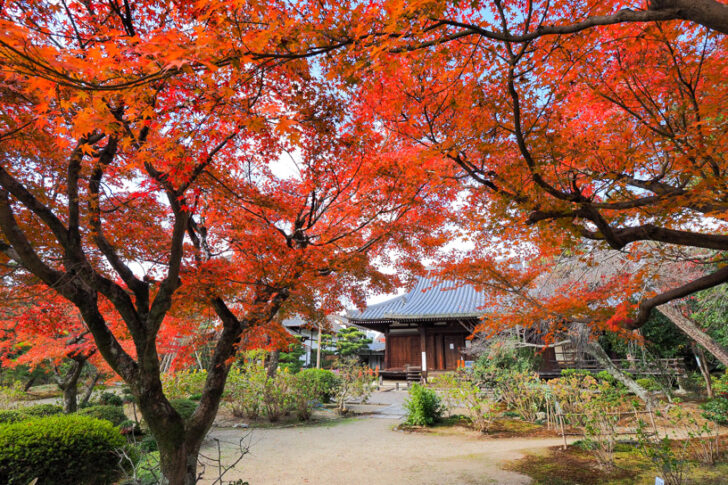
1,Ninna Temple
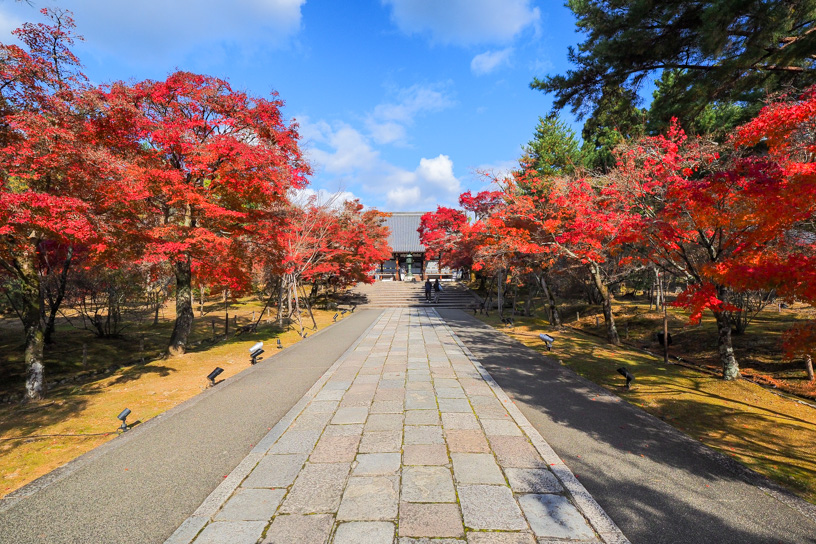
Mid-November to early December
From Kyoto Station, take Kyoto City Bus No. 26 to Omuro-Ninnaji Temple.
The vast temple grounds include the Kondo Hall (a national treasure), the five-story pagoda, the Mikado (an important cultural property), and the Kannon Hall, as well as the Ryoko-tei and Hibo-tei tea houses, which are said to have been moved from the residence of Ogata Korin, a painter of the Edo period.
2,Tojiin
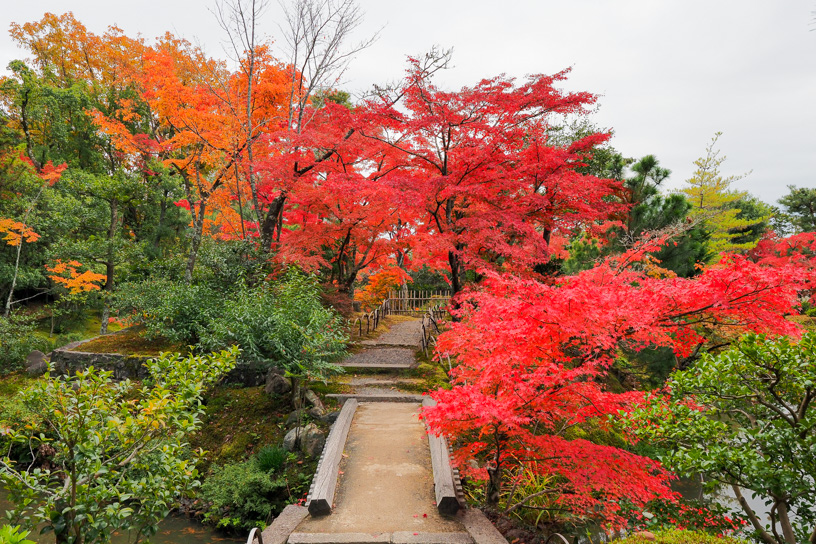
Best time to visit is mid-November to early December.
From Bus Stop D3, take Kyoto City Bus No. 26 to Tojiin Minami-cho (about 40 minutes), get off at Tojiin Minami-cho bus stop, about 8 minutes walk.
From Bus Stop B2, take Kyoto City Bus No. 50, about 40 minutes, get off at “Ritsumeikan Daigaku-mae” bus stop, about 10 minutes on foot.
Toji-in Temple was built in 1341 by Ashikaga Takauji, the first shogun of the Muromachi Shogunate.
Its name is also derived from Takauji’s Buddhist name. As the family temple of successive generations of the Ashikaga shoguns, wooden statues of successive Ashikaga shoguns from Takauji to Yoshiaki line the grounds of Reikouden.
3,Myoshinji Taizouin
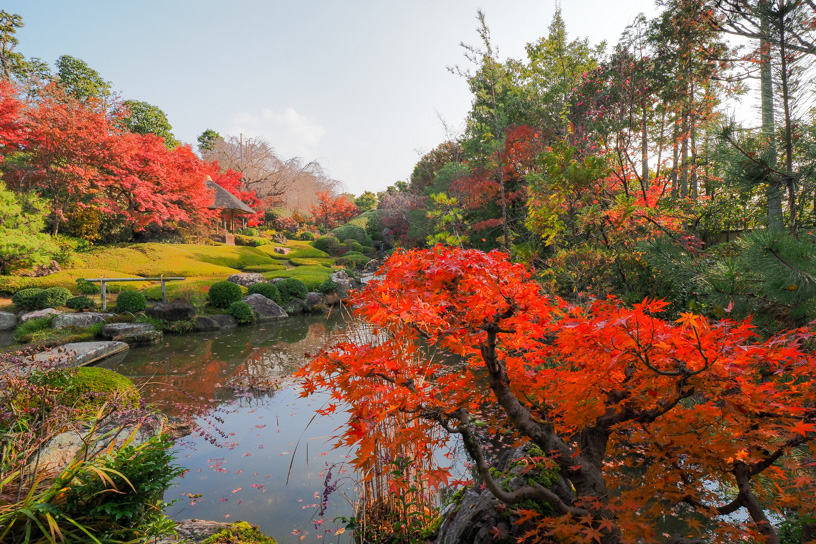
Late November to early December is the best time to visit.
JR Sanin (Sagano) Line (bound for Kameoka/Fukuchiyama) Hanazono Station, approx. 7 min. walk
Take city bus No.26 bound for Omuro-Ninnaji/Yamakoshi, get off at Myoshinji Kitamon-mae bus stop, 5 min. walk.
Myoshinji Temple, located in the western part of Kyoto, has more than 40 pagodas, and Tazo-in Temple is known as one of the oldest among them.
The temple grounds include the national treasure “Hyonenzu” (copy), the “Genshin no Niwa” (dry landscape garden), a historic site of scenic beauty, and the “Yokoen” (garden with a pond and circular path around it), where the seasonal scenery is beautiful.
4,Houkongouin
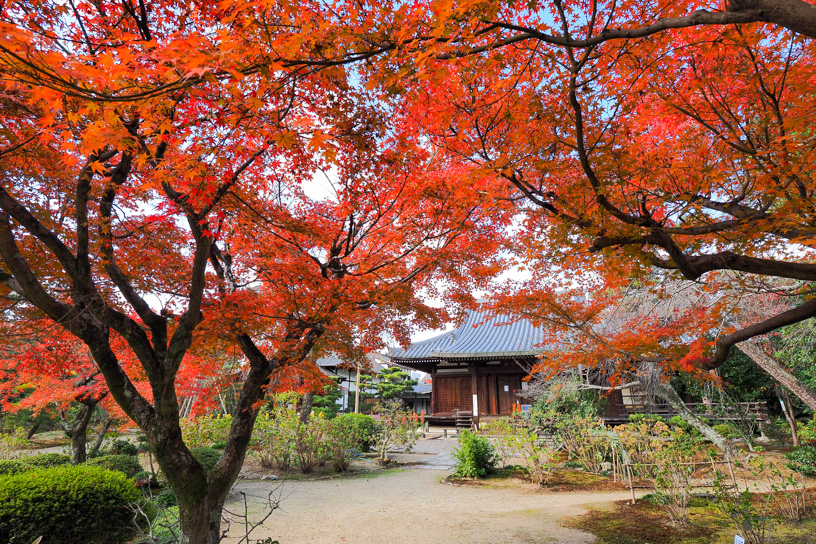
Late November to early December is the best time to visit.
JR “Hanazono” bus stop, approx. 5 min. walk
Hanazono Ougino-cho City Bus Stop, approx. 2 min. walk from the bus stop.
A temple of the Ritsu sect, famous for its garden that imitates the Pure Land of Ultimate Bliss. In the early Heian period (794-1185), Natsuno Kiyohara, the Minister of the Right, built a villa and turned it into a temple, Narabigaoka-dera. Later, Emperor Montoku built a large temple and called it Tenan-ji, but in 1130, Taikenmon-in restored it and called it Hokkeumgo-in.
The four colors of lotus flowers are gathered at Hokkeumgo-in Temple, which was named after the large blue, yellow, red, and white lotus flowers that bloom in the Pure Land of Ultimate Bliss.
In the circular garden, designated as a place of scenic beauty, about 90 varieties of lotuses, including oga lotus, sokuhiren, and oji lotus, bloom one after another in a variety of colors.
5,Ryoanji Temple

Late November to early December is the best time to visit.
7 minutes walk from Ritsumeikan Daigaku-mae bus stop on No. 50 city bus.
Ryoanji Temple is a temple of the Myoshinji School of the Rinzai Sect, located in Ryoanji Goryonoshita-cho, Ukyo-ku, Kyoto City.
It is a sub-temple of Myoshinji Temple, the head temple of the Rinzai sect. The temple is located in Goryonoshita-cho, Ryoan-ji, Ukyo-ku, Kyoto. The main deity is Shakyamuni Buddha.
The temple was founded by Hosokawa Katsumoto and Giten Gensho. It is known for its famous stone garden. It is registered as a World Heritage Site as “Cultural Properties of Ancient Kyoto.