1,Manshuin Temple
Best time to visit is mid to late November.
Approx. 20 minutes walk from Shugakuin Station on the Eizan Electric Railway
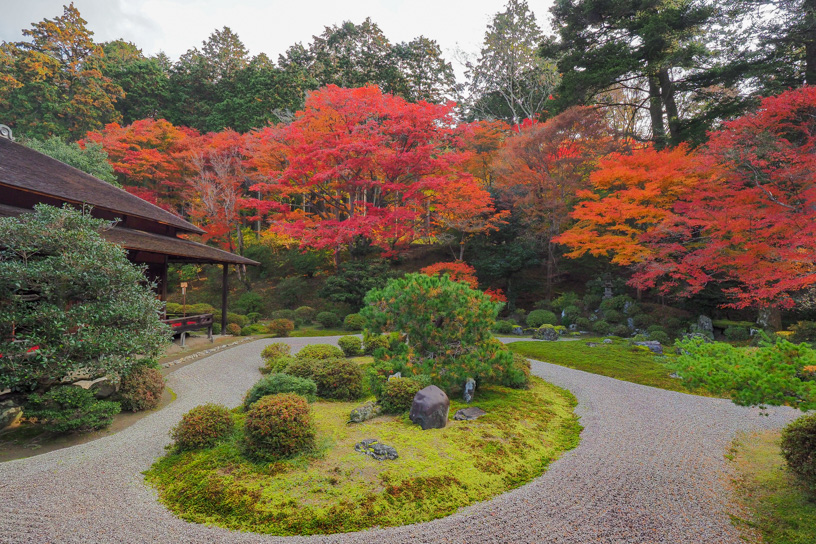
Manjyuin is a monzeki temple famous for its elegant sukiya-style shoin-style building and garden, and is said to be a small Katsura-rikyu (a detached palace in Katsura).
Visitors can enjoy a variety of flowers from season to season, including camellias, Japanese apricots, Someiyoshino cherry trees, sarsaparilla, sasa gentian, and sasanqua.
Especially popular are the Kirishima azaleas that bloom around early May and the autumn leaves around mid-November, which blend beautifully with the dry landscape garden.
2,Jisso-in
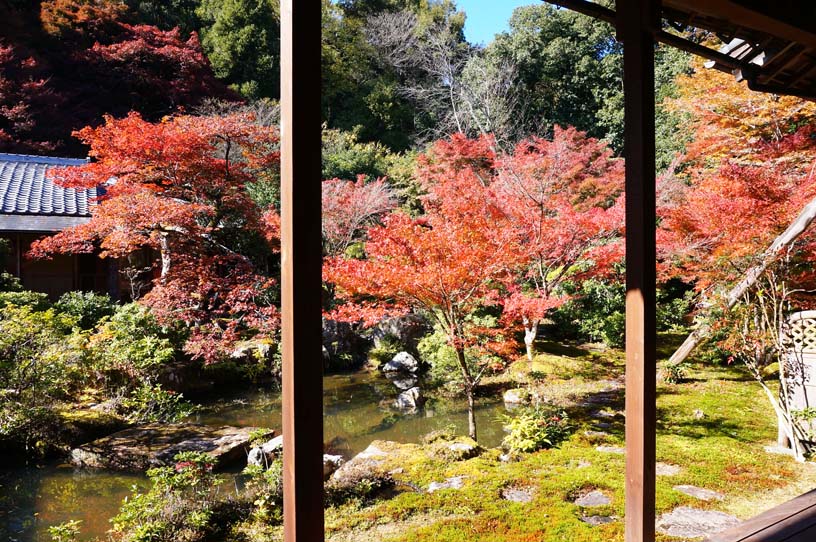
Best time to visit is early November to early December.
Take Subway Karasuma Line to Kokusai Kaikan, 19 min. from Subway Exit 4-1. Take Kyoto Bus at Kyoto Bus Stop ①, 13 min. to “24 Iwakura Jissoin”.
Jisso-in Monzeki Temple is located in Iwakura, Rakuhoku, Kyoto.
With a history of approximately 800 years, this temple is a highly prestigious monzeki temple where regents and members of the imperial family have served as chief priests for many generations.
The temple is known for its “Toko-midori” and “Toko-momiji” (floor maple leaves), with fresh greenery and autumn leaves shining on the polished floorboards.
3,Shisendo
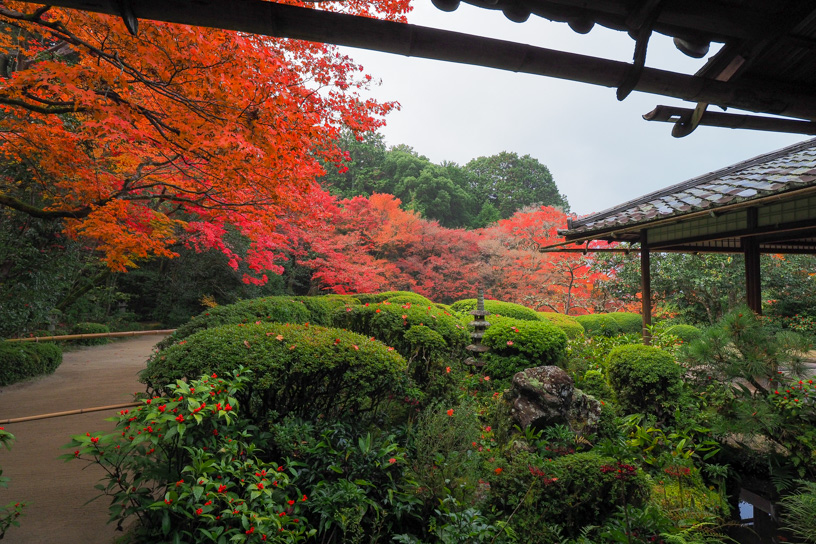
The best time to visit is from early November to early December.
Get off at Ichijoji Station on the Eiden Line and walk east for about 15 minutes.
Shisendo is now a popular spot for viewing autumn foliage that is expected to be quite crowded.
A recommended spot is the garden created by Ishikawa Jozan, who is said to have created Shisen-do.
Looking at the garden from the Shoin, you will feel as if you were transported back in time from the present day to that era.
Although the garden that can be seen today is not the garden created by Ishikawa Jozan himself because it has been repaired, one can still see traces of that period in many parts of the garden. It is a popular spot for viewing the autumn foliage, so expect to see crowds.
4,Sekizanzenin
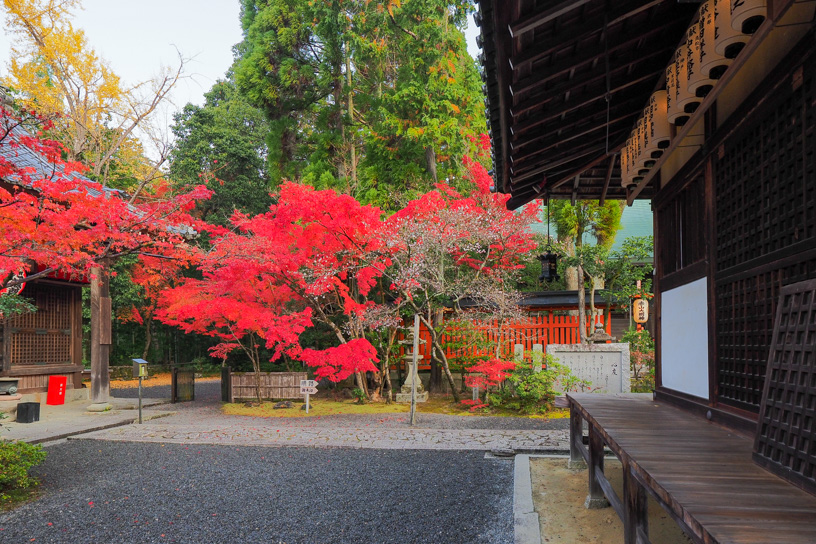
Mid to late November is the best time to visit.
Approx. 20 minutes walk from Shugakuin Station
World Heritage Site, Sekizan Zen-in, the pagoda of Enryaku-ji Temple on Mt.
Seen from the location of the Kyoto Imperial Palace,
The temple is located in the direction of the “Omoteokimon (ogimon)” (northeast) when viewed from where the Kyoto Imperial Palace was located,
The temple is also known as “Momiji-dera” (temple of maple leaves).
Also known as “Momiji-dera” (temple of maple leaves), it is famous for its autumn foliage.
5,Enkouji Temple
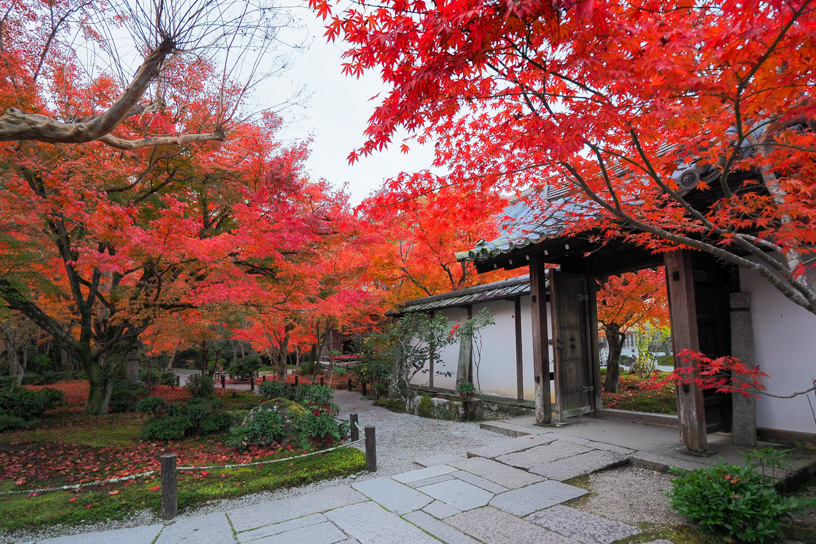
Mid to late November is the best time to visit.
From Kyoto Station, take the No. 5 train bound for Ginkakuji/Iwakura, alight at “Ichijoji Shimokamatsu-cho” and walk about 7 minutes.
There are statues of the Thousand-armed Kannon (Goddess of Mercy) and Gensen (Goddess of Mercy), both said to be by Unkei, as well as a screen depicting a bamboo grove by Maruyama Okyo and a wooden typeface from a publication given to Ieyasu.
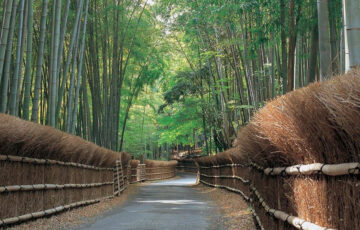
The garden includes Seiryuchi Pond, the oldest pond in Rakuhoku, where visitors can walk through a bamboo grove.
6,Sagimori Shrine
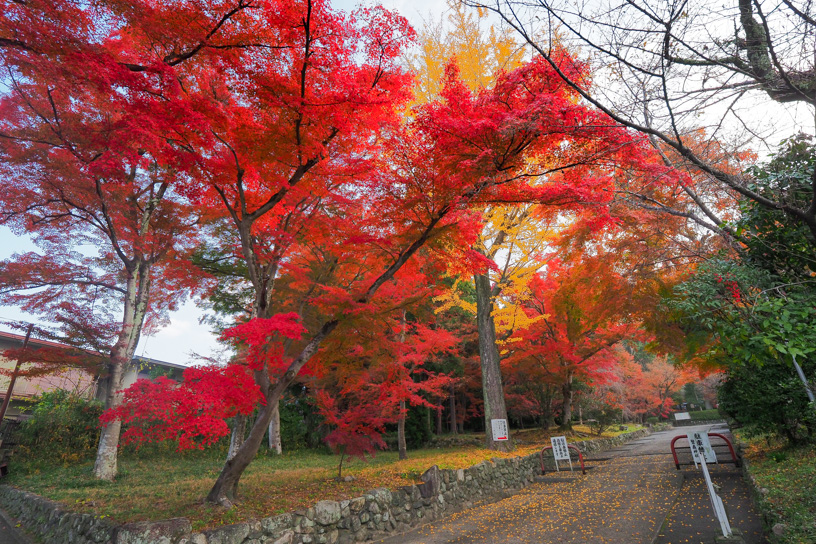
Late November is the best time to visit.
7 minute walk from Shugakuin Station on the Eizan Electric Railway line in the direction of Higashiyama
The shrine is said to have been built in the Jokan period (859-77), the early part of the Heian period (794-1185), and was originally enshrined at the Shugakuin detached palace site before being moved to its current location in 1689.
The shrine enshrines Susanoo-no-mikoto and is the local deity of the Shugakuin and Yamahata areas.
On May 5, boys in kimono, red sashesuki, and sedge hats carry fans in their hands and walk around with portable shrines accompanied by gongs and drums, calling out “San-Yore, San-Yore,” while wearing kimono, red sashes, and sedge hats.
7,Rurikouin temple
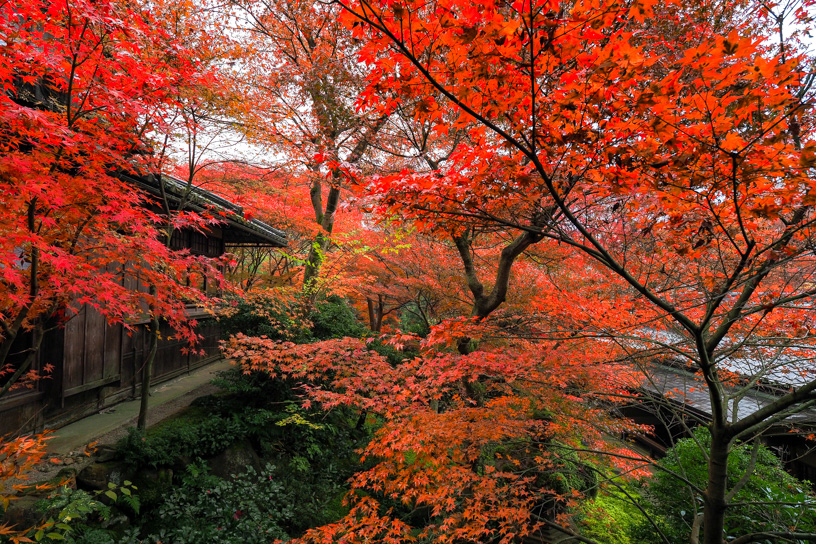
The best time to visit is from mid-November to early December.
5 minutes walk from Yase-Hieiyamaguchi Station of Eizan Electric Railway
Ruriko-in Temple in Kyoto stands quietly in the Yase area, which has been loved by aristocrats and warriors since the Heian period (794-1185).
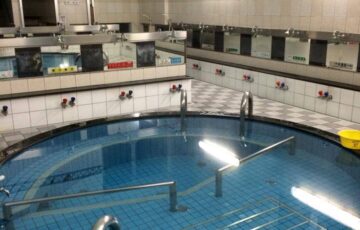
The sukiya-style building has a prestigious and serene atmosphere, and the famous garden, which is in harmony with the surrounding nature, is filled with a Japanese atmosphere. Rurikoin was originally a place where Emperor Temmu healed his wounds in a kiln bath when he was injured during the Imjin War, and has since been a favorite place for Heian aristocrats and warriors to relax and enjoy the peaceful atmosphere.
8,Renge Temple
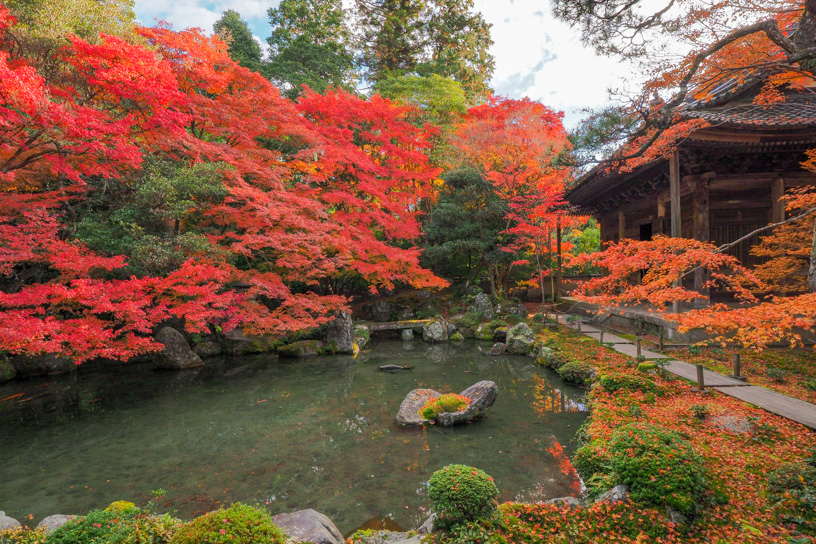
Best time to visit is mid to late November.
7 minutes walk from Miyakehachiman Station
The garden extends from the east side of the shoin to the south side, with the highlight of the Rengeji garden being the composition centering on the pond located on the east side. The garden is thought to have been created in the early Edo period (1603-1868) by Ishikawa Jozan, who was involved in the revival of the temple, or a gardener of the Kobori Enshu lineage.
At the back of the garden, there is a spring that forms a pond in the shape of the Chinese character for “water” (mizuji). To the left in front of the pond are Turtle Island and Crane Island. Turtle Island is made of large stones and has a stone lantern called a “tojin-hat marugata” (rounded headpiece of a Chinese character).
9,Konpuku Temple
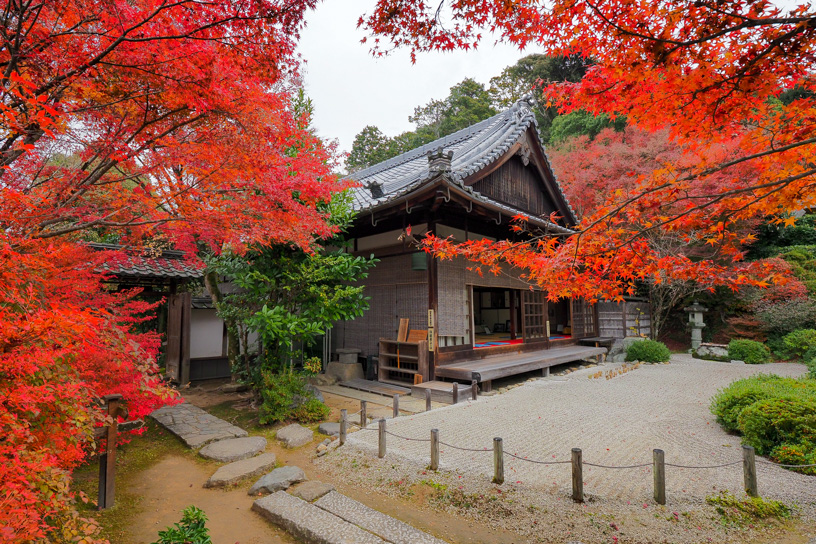
Best time to visit is mid to late November.
5 min. walk from Ichijoji Shimokurimatsu-cho bus stop on the city bus.
BUTSUHIZAN KINPUKUJI Temple is a temple where you can see the “Bashoan,” a hermitage where Matsuo Basho stayed, and a karesansui garden created by Jihei Ogawa VII.
In the mid-Edo period, the temple was rebuilt by Yosa Buson, who admired Matsuo Basho, and his family, and Buson’s works are on display.