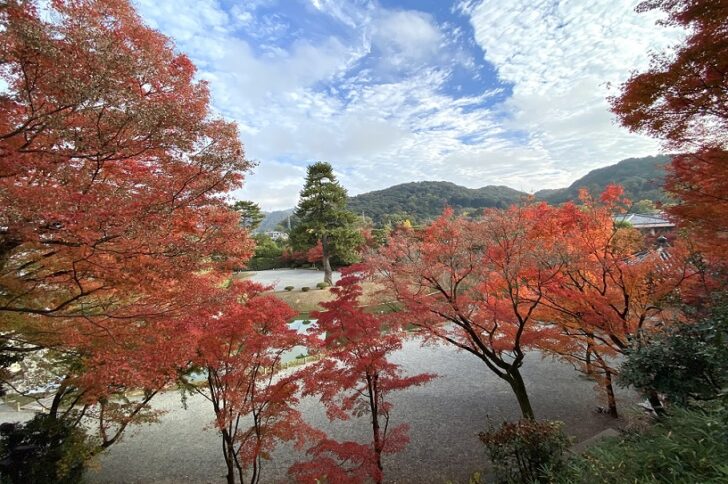
1,Sennyuji Temple
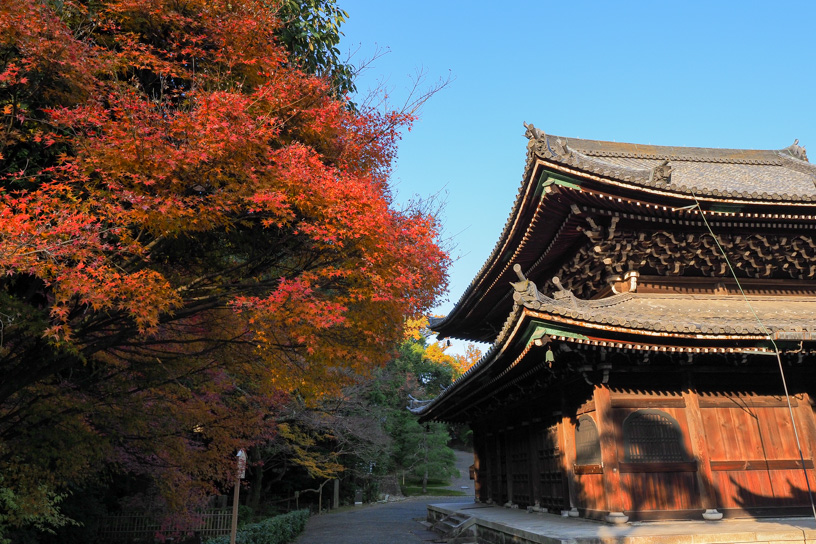
Early to mid-November is the best time to visit.
From Kyoto Station, take Kyoto City Bus No. 208 to Sennyuji-michi.
Located close to Kyoto Station, Sennyuji Temple is the head temple of the Sennyuji School of the Shingon sect of Buddhism, which is closely associated with the Imperial Family.
We will guide you to the highlights of Sennyuji Temple, including the largest “Nirvana” in Japan, the “Narukiryu” dragon on the ceiling of the Shariden Hall, and the “Yang Kannon” statue, said to be the most beautiful statue of Kannon in the world.
2,Imakumano-Kannon Temple
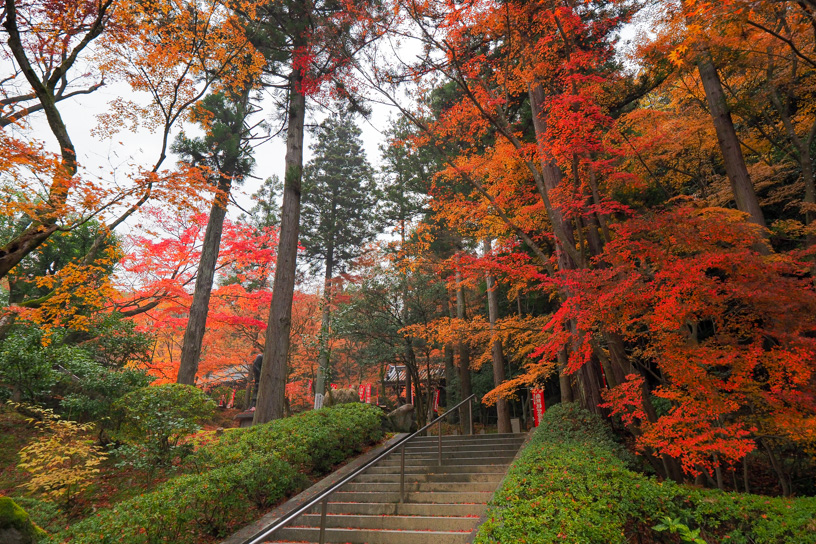
Mid to late November is the best time to visit.
Get off at Sennyuji-michi bus stop and walk about 10 minutes.
Imakuma-no-Kannon-ji Temple is the 15th temple of the 33 temples in the western part of Japan.
It is a temple of the Shingon-Senyuji school of Shingon Buddhism located in Kyoto City. The main deity is the eleven-faced Kannon, said to have been hand-carved by Kobo Daishi (Kukai).
It is worshipped as the Kannon of the head (to ward off headaches and to bestow wisdom). In autumn, the temple is known for its beautiful autumn leaves.
3,Tofukuji Temple
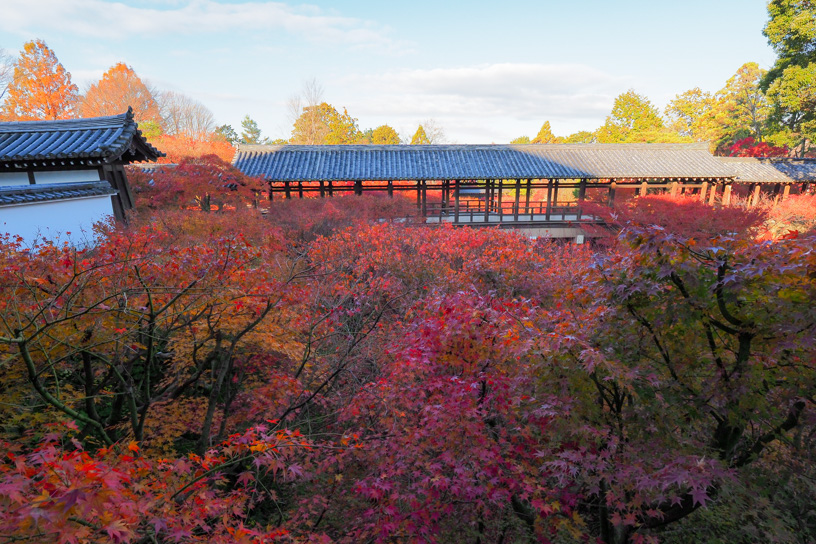
Mid to late November is the best time to visit.
From Kyoto Station, take Kyoto City Bus No. 208 to Tofukuji Temple.
Tofukuji Temple is the fourth largest Zen temple in the Kyoto Gozan (five mountains), and is decorated with autumn leaves in Kyoto.
Visitors can enjoy the spectacular view created by the historical architecture and magnificent natural beauty of the Hojo Garden, designated as a national place of scenic beauty, with its Big Dipper and checkered pattern, and the Tsutenkyo Bridge over the valley that runs through the temple grounds.
4,Tofukuji Koumyouin
Mid to late November is the best time to visit.
Take the Keihan Main Line bound for Yodoyabashi, get off at Toba-kaido Station, and walk about 7 minutes.
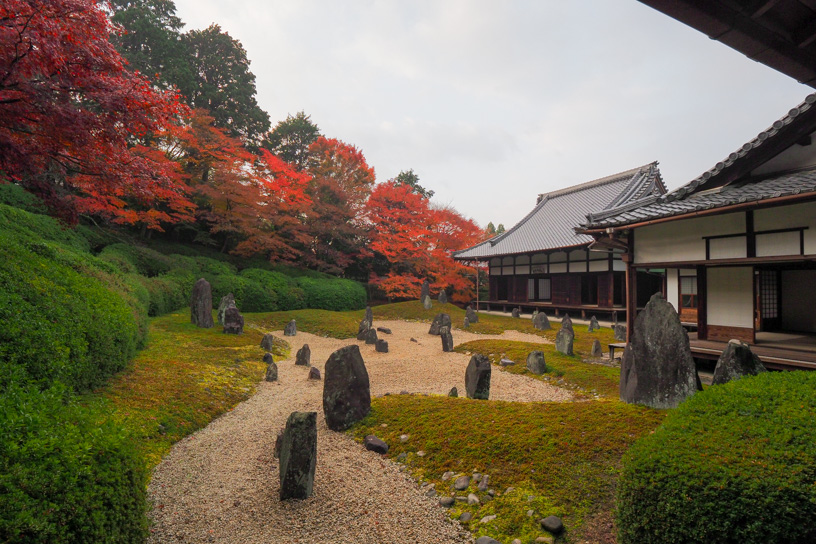
Koumyouin Temple is also known as the “rainbow moss temple.
This is because the beautiful Hashinniwa garden is colored like a rainbow with trees, plants and flowers from season to season.
In early summer, satsuki (Japanese azalea) and azaleas bloom beautifully, green maples in summer, and autumn leaves in fall turn into glossy colors.
Also, during the rainy season, after heavy rains, a pond forms on the white sand, making the green moss look even more outstanding.
5,Byoudouin
Late November to early December is the best time to visit.
10-minute walk from Uji Station on the JR Nara Line
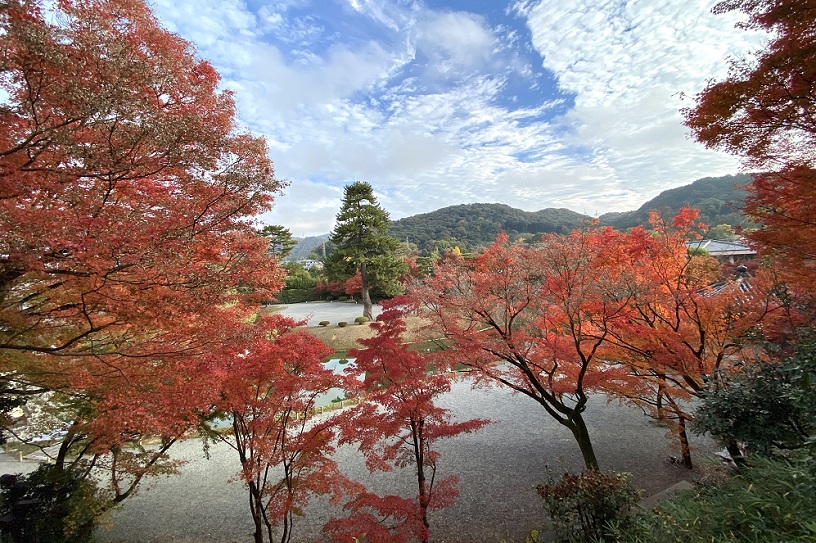
The main attraction of Byodoin is the “Phoenix Hall” with its shining golden phoenixes.
It is a valuable cultural heritage as the only remaining structure where one can feel the vestiges of the Fujiwara family that flourished during the Heian period.
The Ho-oh-do features a hall built as if it were floating on a pond.
6,Koushouji
The best time to visit is from mid-November to early December.
15 minutes on foot from Uji Station on the Keihan Uji Line
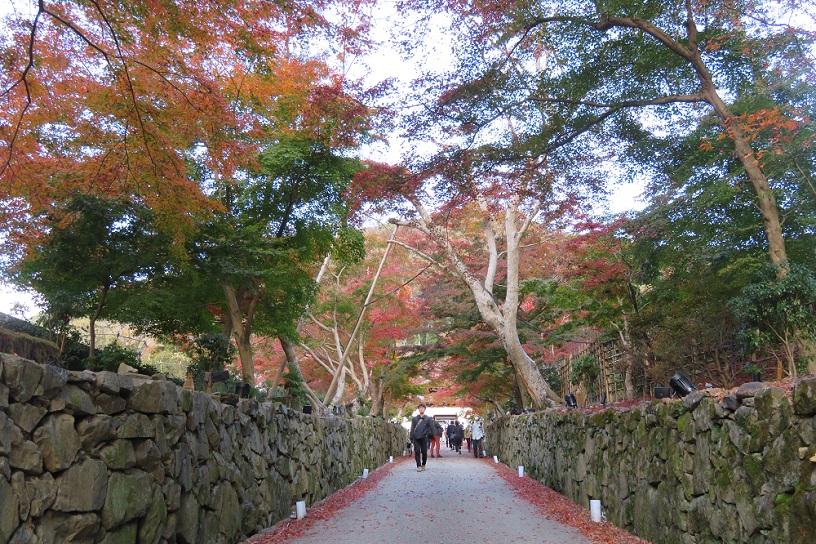
The approach to the temple is called “Koto-zaka” (meaning “Kotosaka” in Japanese) because of the sound of the stream flowing nearby and the shape of the slope, which resembles a koto (a Japanese harp).
After climbing up Kotozaka, you will be welcomed by the gate of the temple, which is built in the Chinese style of the Dragon Palace. The main deity is a statue of Shakyamuni Buddha.